Regional Climate Change Adaptation Strategies (RASs) are 5-year practical strategies developed by the community to address the unique challenges and opportunities that climate change brings to Victoria’s regions and guide locally relevant practical action.
Themes in the strategies include:
- preparing for and recovering from emergencies
- caring for the natural environment
- improving health and wellbeing
- strengthening the economy and workforce
- improving resilience of our built environment
- embracing renewable energy.
Check out your RAS for more information:
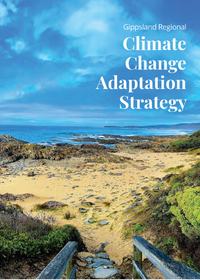
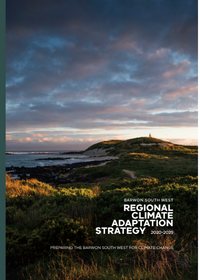
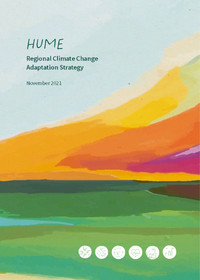
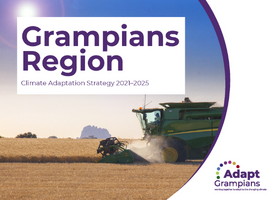
The RASs were developed over 4 years through a place-based, community-owned and led process supported by the Victorian Government. More than 8,000 Victorians were involved. The strategies are the centrepiece of the $9.32 million Supporting Our Regions to Adapt program funded by the Sustainability Fund.
The program supports collaboration within regional communities to strengthen resilience to climate change by building adaptive capacity and delivering place-based, locally relevant adaptation action.
Funding for 2021-22 priority projects
In addition to funding the RASs, the Supporting Our Regions to Adapt program also provides $1.5million for the initial implementation of priority projects.
For a list of projects by region, please refer to the Regional Adaptation Projects selected by Regional Stakeholder Working Groups (PDF, 1003.2 KB).
Community Climate Change Adaptation (3CA) Grants Program
The Department of Energy, Environment and Climate Action (DEECA) delivered the $1 million Community Climate Change Adaptation (3CA) Grants Program to build resilience to climate change impacts through community-driven adaptation activities. As part of this one-off funding program, grants were awarded to 17 community-led adaptation projects (DOCX, 259.7 KB) that addressed identified gaps and priorities in Victoria’s regions.
Regional adaption resources
This feedback is a summary of submissions made on the draft Grampians Region Climate Adaptation Strategy following public exhibition on Engage Victoria. The draft strategy was released for public comment on the 7 April 2021 with submissions closing on the 23 May 2021.
This report summarises the comments made and issues raised in public submissions. The feedback report also explains how the Grampians Region Climate Adaptation Strategy was amended in response to each public submission.
In 2018, the Victorian Government spoke with community members, businesses, researchers and government agencies across the state. These snapshots will soon be replaced by local-led regional climate change adaptation strategies.
Read about the climate impacts, actions, gaps and priorities for your area, based on those conversations.
- Barwon South West climate change adaptation snapshot report (PDF, 2.5 MB)
- Gippsland climate change adaptation snapshot report (PDF, 2.2 MB)
- Grampians climate change adaptation snapshot report (PDF, 2.1 MB)
- Greater Melbourne climate change adaptation snapshot report (PDF, 2.3 MB)
- Hume climate change adaptation snapshot report (PDF, 1.9 MB)
- Loddon Mallee climate change adaptation snapshot report (GIF, 39.5 KB)
Place-based adaptation guidance notes – a best practice approach to adaptation planning in Victoria’s regions
- Place-based Climate Change Adaptation Guidance Notes: Overview (PDF, 918.0 KB)
- Guidance Note 1: Place-based Adaptation Concepts and Approaches (PDF, 684.1 KB)
- Guidance Note 2: Establishing a Learning Framework (PDF, 341.4 KB)
- Guidance Note 3: Developing the Regional Adaptation Strategy (RAS) vision, goals and change narrative (PDF, 987.5 KB)
- Guidance Note 4: Understanding the Region (PDF, 1.1 MB)
- Guidance Note 5: Exploring Multiple Futures (PDF, 1.8 MB)
Regional adaptation policy briefs – understanding the drivers and barriers for place-based adaptation
- Policy Brief 1 - Barriers to the implementation of climate change adaptation plans and action (PDF, 257.3 KB)
- Policy Brief 2 - Determinants of adaptive capacity for climate change adaptation (PDF, 205.2 KB)
- Policy Brief 3 - Social and cultural barriers to the implementation of climate change adaptation plans and action (PDF, 244.9 KB)
Page last updated: 21/10/26